Deconstructing the AI Knowledge Graph: How Entity Association Replaced the Backlink
For the last two decades, your agency has operated on a simple, profitable premise: more high-DR backlinks equal higher rankings. You built entire service models, client reports, and P&L statements on this foundational truth. But that foundation is cracking. While you were busy managing outreach spreadsheets and celebrating a new link on a DR70 site, a tectonic shift was happening beneath the surface of the web. AI answer engines like Perplexity and Google’s AI Overviews aren’t just a new feature; they represent a fundamental rewriting of how information is understood, organized, and presented. They don’t think in links; they think in concepts.

This new “agentic web” runs on a vast, interconnected conceptual brain called a knowledge graph. In this reality, a simple hyperlink is a whisper, while a consistent, context-aware mention of your brand is a roar. The game is no longer about tricking an algorithm with link velocity; it’s about teaching an AI that your client’s entity is the canonical answer to a question. This requires a new playbook and, more importantly, a new kind of operational infrastructure. Traditional SEO workflows built for the “10 blue links” era are hopelessly outmatched. To survive, your agency needs a pipeline built for the post-Google world, one that can create and syndicate entity-rich content at a scale and speed that manual processes can’t touch.
Key Takeaways
- The Backlink is a Deprecating Asset: For two decades, backlinks were the gold standard for SEO authority. In the age of AI, they are now just one of many signals, and their value is diminishing as AI models become better at understanding context over simple “votes.”
- AI Runs on Knowledge Graphs, Not Link Graphs: AI answer engines like Perplexity and Google’s AI Overviews build their understanding of the world through a network of entities (people, places, concepts) and their relationships, not just a map of hyperlinked pages.
- Entity Association is the New Authority Signal: The new currency of trust is entity association—the consistent, contextually relevant co-occurrence of your brand with key topics across the web. Unlinked mentions can now be more powerful than a forced backlink.
- Traditional SEO is Now GEO (Generative Engine Optimization): Your goal is no longer just to rank a blue link. It’s to become a canonical, citable entity within AI knowledge graphs, ensuring your brand is the source for AI-generated answers.
- Your Agency Needs New Infrastructure: Relying on Ahrefs, SEMrush, and manual outreach for link building is optimizing for a dying paradigm. Survival requires a new pipeline built for creating and syndicating entity-rich content at scale.
TL;DR
The game has changed. While you were busy chasing high-DR backlinks, AI models like ChatGPT and Google’s AI Overviews started building their own version of the internet—a massive “brain” called a knowledge graph. In this new world, a simple link is a weak signal. The AI cares more about association. It wants to see your brand entity consistently mentioned alongside relevant industry concepts, experts, and problems across thousands of sources. This is called entity association, and it has replaced the backlink as the true measure of digital authority. Agencies that don’t adapt their entire content pipeline—from creation to syndication—to build these associations will become obsolete. Blog MONKEE is the first content pipeline built specifically for this new reality, automating the process of embedding your brand into the AI’s knowledge graph.
Backlinks are no longer the primary signal of authority; they are now just one of many inputs into a more complex entity-based model.
For twenty years, the SEO mantra was simple and effective: get more high-quality backlinks. This “vote of confidence” model, pioneered by Google’s PageRank algorithm, created an entire industry of link builders, outreach specialists, and digital PR firms. However, this model is fundamentally broken in the age of AI, not because links are worthless, but because they are an incomplete and easily manipulated signal.
Why the Link Graph is an Obsolete Map
The map of hyperlinked pages that defined Web 2.0 is a poor guide for an AI trying to understand the world. Its core weaknesses have become liabilities in the agentic web.
- Signal Dilution: Decades of link spam, Private Blog Networks (PBNs), and low-quality guest posting have poisoned the well. Search engines have become incredibly sophisticated at identifying and devaluing these manipulative tactics. In fact, Google reports that its advanced spam-fighting systems prevent more than 99% of spam from ever appearing in search results. This means a huge portion of the link-building effort is simply nullified before it can have an impact.
- Context Blindness: A backlink tells an AI that a connection exists between Page A and Page B, but it provides very little information about the nature or quality of that connection. Is it an endorsement? A citation? A criticism? A paid placement? Without deep contextual understanding, the link itself is just noise.
- AI’s Superior Pattern Recognition: Large Language Models (LLMs) are, at their core, pattern recognition machines. They are incredibly adept at identifying unnatural link patterns, anchor text over-optimization, and the digital footprints left by clumsy link-building campaigns. Schemes that might have fooled algorithms five years ago are now transparently obvious to AI, making them ineffective and risky.
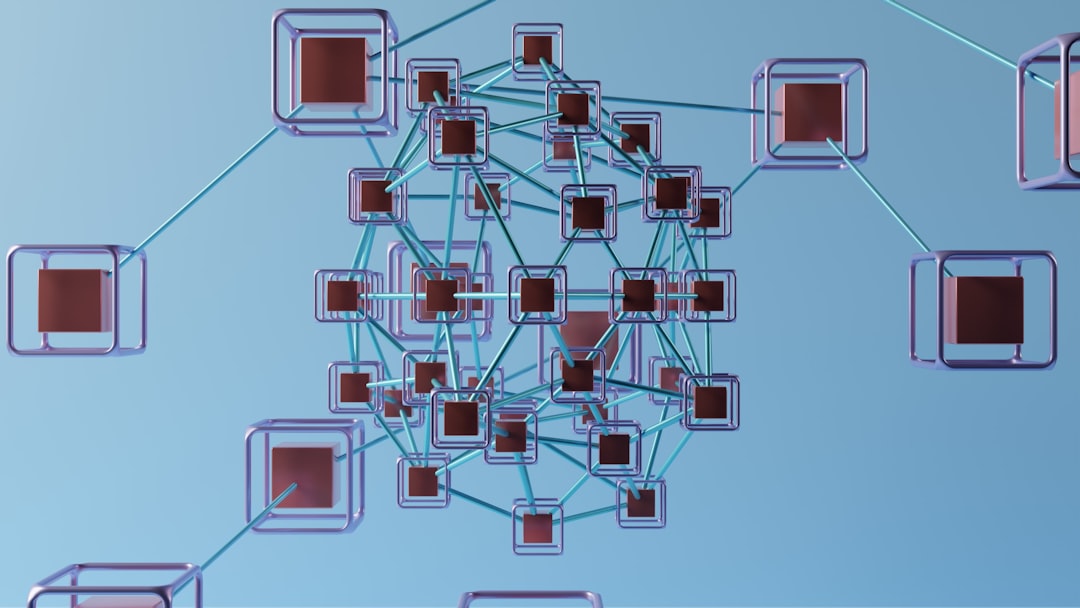
AI answer engines build their reality not from a list of linked pages, but from a vast, interconnected web of entities and their relationships.
Forget thinking about the web as a collection of 10 blue links on a search results page. AI sees a complex, multi-dimensional network of concepts. This is the AI Knowledge Graph. It’s the conceptual framework that allows an AI to answer “What is the best CRM for a small marketing agency?” not by finding a page with the most backlinks, but by understanding the entities involved and the attributes and relationships that connect them.
The Core Components of the AI Knowledge Graph
To optimize for this new reality, you must understand its building blocks. These are the elements you need to manipulate to establish your clients as authorities.
- Entity
- These are the “nouns” of the web—your brand, your competitors, your products, key industry leaders, and core concepts (e.g., “SEO,” “Content Marketing,” “Lead Generation”). An entity is a distinct, well-defined thing or concept.
- Attribute
- These are the properties that define an entity. For example, an attribute of Blog MONKEE is “AI-driven content pipeline”; another is “designed for agencies.” For your client, it might be “specializes in B2B SaaS” or “offers 24/7 support.”
- Relationship
- This is the magic. It’s the “verb” that connects entities. For example: [Your Agency] is an expert in [Lead Generation]; [Your Product] solves the problem of [Manual Content Workflows]. The strength and frequency of these relationships in the AI’s data set determine authority.
| Traditional SEO Focus | Generative Engine Optimization (GEO) Focus |
|---|---|
| Keyword Ranking | Entity Authority |
| Backlink Acquisition | Relationship Building |
| On-Page Optimization | AI-Answer Extractability |
| Domain Authority (DA/DR) | Share of AI Voice |
Consistent, contextually relevant co-occurrence of your brand’s entity with topic entities across the web is now more powerful than a high-DR backlink.
This is the essence of entity association. To win in the agentic web, your agency must stop “building links” and start “weaving mentions.” The goal is to train the AI, through overwhelming repetition and context, to associate your brand’s entity with the problems you solve and the expertise you claim. When an AI crawler sees your brand name appear in thousands of contextually relevant articles, forum discussions, and syndicated posts—even without a hyperlink—it strengthens the relationship between your entity and that topic in its knowledge graph. A single high-DR backlink is a data point; a thousand unlinked mentions in the right context is a pattern. AI trusts patterns.
From Link Building to Entity Weaving: The New Tactics
This shift requires a new set of operational tactics focused on creating and distributing context, not just links.
- Unlinked Brand Mentions: Engineering situations where your brand is mentioned naturally in high-quality content is the new guest post. This is achieved through high-volume content syndication, expert commentary, and digital PR that prioritizes the mention over the link.
- Schema and Structured Data: Use JSON-LD to explicitly tell search engines what your entity is, what its attributes are, and how it relates to other entities. This is like handing the AI a cheat sheet for your brand, removing ambiguity and accelerating its understanding. The entire Blog MONKEE engine is designed to automate the creation of this rich, structured data for every piece of content.
- Definition Lists & FAQs: Formatting content with clear question/answer and term/definition pairs makes it incredibly easy for AI to extract and cite your content as a canonical source. This AI-first formatting is a core principle of Generative Engine Optimization.
Agencies that continue to sell ‘backlink packages’ are selling a dying service; the future lies in orchestrating multi-platform entity-building campaigns.
The anxiety you’re feeling is real. Your clients are seeing their organic traffic eroded by AI Overviews, and your old playbook isn’t working. The operational drag of managing writers, spreadsheets, and WordPress logins for dozens of clients is unsustainable when the core activity—link building—is delivering diminishing returns. The entire agency model must shift from delivering links to delivering authority within the AI’s knowledge graph. This is a challenge that demands new solutions for agencies.
The Shift from SEO to GEO (Generative Engine Optimization)
This new landscape requires a new acronym and a new mindset. Welcome to Generative Engine Optimization (GEO).
- Your New KPI: The key metric is no longer “Number of Backlinks Acquired.” It’s “Share of AI Voice”—how often is your client’s brand cited, mentioned, or used as a source in AI-generated answers across platforms like Google, Perplexity, and ChatGPT?
- The Need for Scale and Speed: Building entity association requires a high volume of high-quality, contextually rich content distributed across the web instantly. Manual processes involving writers, editors, and uploaders simply cannot keep up with the velocity required to make an impact.
- The Pipeline is the Product: Your agency’s value is no longer in your outreach team’s contact list. It’s in the efficiency and power of the system you use to establish your clients as entities. Your ability to execute at scale is your new competitive advantage.
Blog MONKEE is the infrastructure built from the ground up to automate the creation and syndication of entity-rich content.
We saw this shift coming. That’s why we didn’t build another AI writing wrapper or a better SEO reporting tool. We built a comprehensive, 10-stage pipeline designed specifically to dominate the AI Knowledge Graph. Blog MONKEE replaces the outdated, manual process of link building with the automated, scalable orchestration of entity association. It’s the technology that powers the transition from SEO to GEO.
Automating “Mention Campaigns” to Build Entity Association at Scale
Instead of begging for backlinks one by one, Blog MONKEE allows you to design and execute “Mention Campaigns.” This innovative approach allows you to strategically place your brand’s entity within thousands of pieces of relevant content, building the powerful co-occurrence signals that AI models crave. It’s about manufacturing the patterns that teach the AI to associate your client with their target concepts.
Syndicating Your Entity’s Story via IndexNow and WebSub
A great piece of content is useless if the AI doesn’t see it immediately. The traditional “wait for Google to crawl” model is dead. Our “fanout” distribution instantly pushes every published article to indexing APIs like IndexNow and content hubs via WebSub. This push-based indexing ensures your entity associations are registered in near real-time, dramatically accelerating the rate at which the AI’s knowledge graph is updated with your client’s information.
AI-First Formatting for Maximum Extractability
From automated TL;DRs and definition lists to rich JSON-LD schema, every piece of content generated by the Blog MONKEE pipeline is structurally optimized to be consumed, understood, and cited by AI answer engines. We don’t just write content; we engineer it for maximum AI-answer extractability, giving your clients the best possible chance to become the cited source in a generative answer.
Stop Chasing Ghosts, Start Building Your Reality
The backlink is a ghost—a relic of a simpler time. Continuing to build your agency’s services around chasing it is a losing strategy that will leave you and your clients behind. The future of digital authority, and the future of your agency’s profitability, belongs to those who can systematically and efficiently build their brand into the very fabric of the AI’s understanding of the world. The agentic web is here, and it demands a new approach. It’s time to stop building links and start building entities.